

Info on the Animal Class Fish
Main Characteristics of Fish:
- Fish are the oldest vertebrates.
- Fish breathe through gills.
- Fish lay eggs.
- Most fish are ectothermic.
Evolution
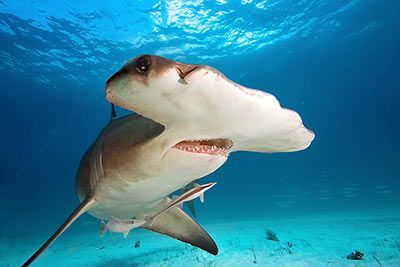
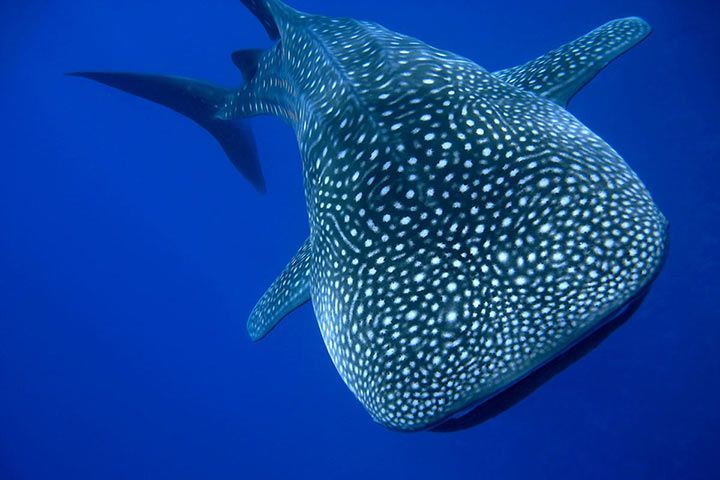
Fish emerged about 450 million years ago. They are the oldest vertebrates. They are divided in cartilaginous fish (e.g. sharks, rays) and osteichthyes (almost all other species). Cartilaginous fish have a skeleton consisting of cartilages and their skin is made up of tiny dermal denticles instead of scales. They do not have a swim bladder and have to actively swim in order not to sink.
Habitat
Where Do Fish Live?
Fishes exclusively live in waters.
How Do Fish Differ From Other Animals?
Fish have gills to breathe in the water.
Diet
What Do Fish Eat?
Fish feed on plankton (tiny organisms) and other marine creatures.
Locomotion
How Do Fish Move?
Fish use their fins and muscles to swim. The pectoral and ventral fins help them to navigate, while the tail fin usually serves as a “engine” to move along. There are a few fish that also can “fly” or climb.
Reproduction
How Do Fish Reproduce?
Fish lay eggs. Most of them do not take care of their offspring. This means that the young have to look after themselves after they have hatched out. Some fish guard their eggs, some of them even give birth to babies (e.g. sharks).
Fun Facts
Do Fish Suffer from Seasickness?
Yes! Like human beings, fish have a vestibular system. If the sea is rough, they head for the lower and calmer water layers. Sometimes this does not help and they feel sick and throw up into the ocean (yummy!).
Do Fish Get Thirsty?
Considering all the water around them, one might ask oneself: Do fish need to drink? Yes and no. Even though they do not drink like human beings, they absorb water through their skin.
Are There Flying Fish?
Yes! They do not have wings and do not use little toy airplanes (just joking!). They rapidly flap their tail fin to be catapulted up to 16.4 feet (5 meters) into the air.
Are There Climbing Fish?
Even more impressive than flying fish are climbing fish. The mudskipper has long pectoral fins that it can use like arms. They enable him to climb trees in order to hunt for insects.
Species
There are more than 32,500 species of fish:
| Osteichthyes: | ca. 29,000 |
| Cartilaginous fish: | ca. 1,100 |
The most biodiverse animal orders are:
| Perciforms: | 14.400 |
| Cypriniformes: | 3,250 |
| Catfish: | 3,400 |
| Eels: | 900 |
| Flatfish: | 400 |
| Codfish: | 48 |
Biodiversity
The Remora (suckerfish) rarely swims by itself, but attaches itself with a suction plate to other fish. Its "chauffeur" benefits from it: The Remora eats parasites that nest on the skin. What does this have to do with biodiversity?
- Find Out More:
- Fish master math
- Watch Now on animalfunfacts.net
 Symbiotic Animal Relationships
 Animal Camouflage
 Animal Eating Habits