

Hedgehog
Hedgehog Facts
| Size | 4-17 in (10-45 cm) |
| Speed | Up to 4 mph (7 km/h) |
| Weight | 1.4-2 oz (40-60 g) (smallest), 30-38 oz (870-1,100 g) (largest) |
| Lifespan | 3-6 years |
| Food | Earthworms, insects, woodlice, toads |
| Predators | Owls, dogs, foxes |
| Habitat | Europe, Western Asia, Africa |
| Order | Eulipotyphla |
| Family | Erinaceidae |
| Scientific name | Erinaceidae |
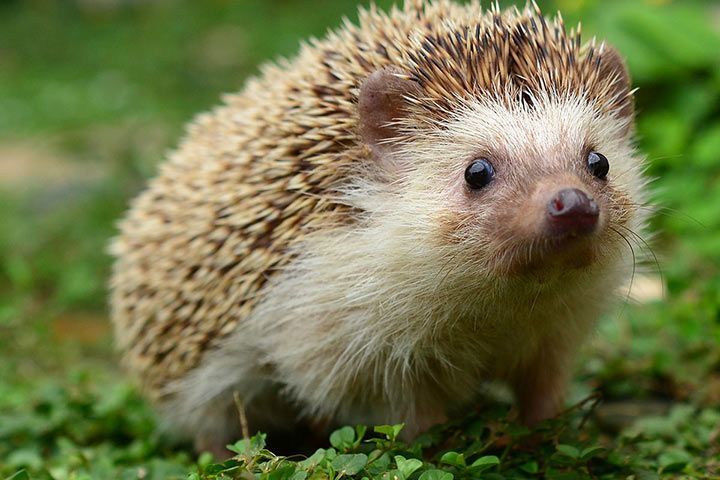
| Characteristics | Greyish brown body, spines |
Main Characteristics
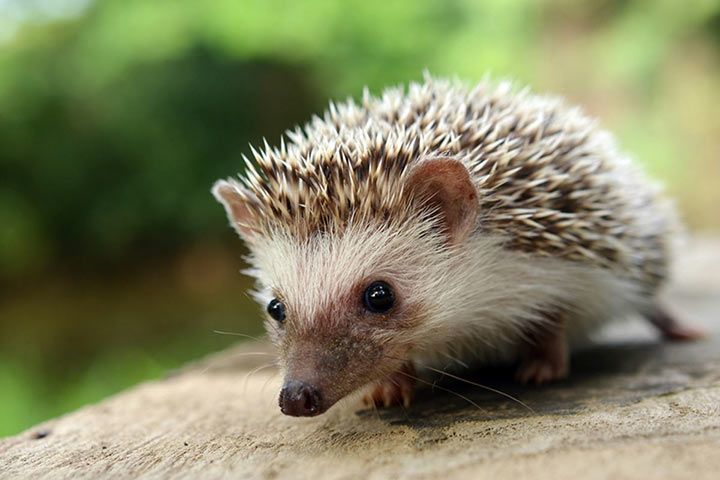
Hedgehogs are insectivores that are mainly active at twilight and during the night. They inhabit light forests, open grasslands and steppes, deserts and even rainforests. They are loners. Hedgehogs have a coat consisting of up to 8,000 spines. These are hollow and can be raised individually.
Hedgehog Species
The best-known of all hedgehogs is the European hedgehog, but there are 24 different hedgehog species. Not all of them are equipped with real spines, there are also hairy hedgehogs. It is also interesting that there exist animals which are associated with hedgehogs (such as the echidna), but actually are monotremes.
Behavior
What Do Hedgehogs Eat?
Hedgehogs mainly feed on (rain) worms, beetles, butterfly larvae, earwigs, snails and spiders. Sometimes they eat small toads and snakes, too.
Why Do Hedgehogs Curl up in a Ball?
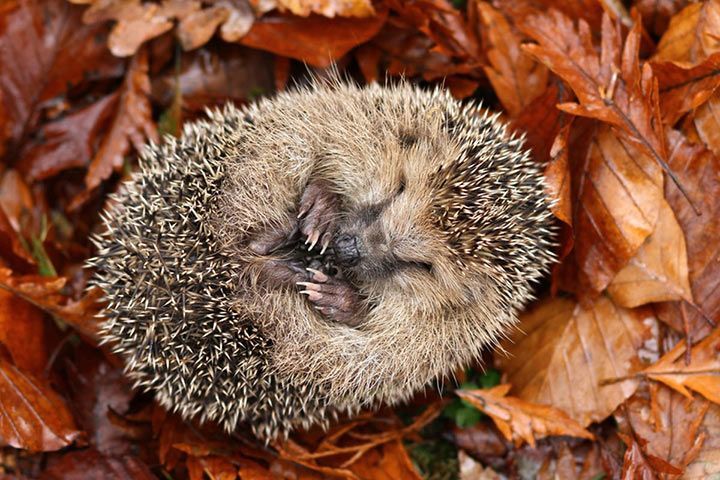
When threatened, hedgehogs roll into a tight ball for self-defense. While this protects them from most predators, this trick does not always help with the red fox.
Do Hedgehogs Hibernate?
Yes, hedgehogs hibernate. In fact, there are only a few animals that really hibernate. Most of them are just in a state of dormancy, they wake up every now and then and have a bite. However, hibernating animals sleep during the whole winter and do not eat anything. Why?
They would'nt find something to eat in the cold season, so their motto could be: "I'm sitting it out". In order not to use too much energy, they slow down their metabolism, heartbeat, breathing and lower their body temperature. Hibernation lasts from about October/November to March/April.
Senses and Abilities
Can Hedgehogs Swim?
Hedgehogs are stunning little creatures. We mostly perceive them as rolled-up “balls”, but it is really amazing what they are capable of. Some hedgehogs can even swim, even though they look as if they would drown straightaway. There are even hedgehogs that can climb!
Hedgehogs Run a Lot
Male hedgehogs are good walkers. You could even say they are passionate long-distance runners. They roam areas of up to 100 hectares, which corresponds to the size of about 130 soccer fields, looking for mating partners and food.
Female hedgehogs only cover areas of about 74 acres (30 hectares) – why get footsore if the boys come to them anyway? By the way, Hedgehogs run up to 2 miles (3 km) per day and up to 4 mph (7 km/h).
Enemies and Threats
Can You Give Milk to Hungry Hedgehogs?
Hedgehogs should never (!) be given milk. They are diary intolerant and can die from it. You should not provide them with dog food, either. Usually, Hedgehogs can take care of themselves so that they do not need any food from us humans. A too lean and sick-looking hedgehog should rather be taken to the vet - he knows best how to help the little guy.
Hedgehogs Hide in Piles of Leaves
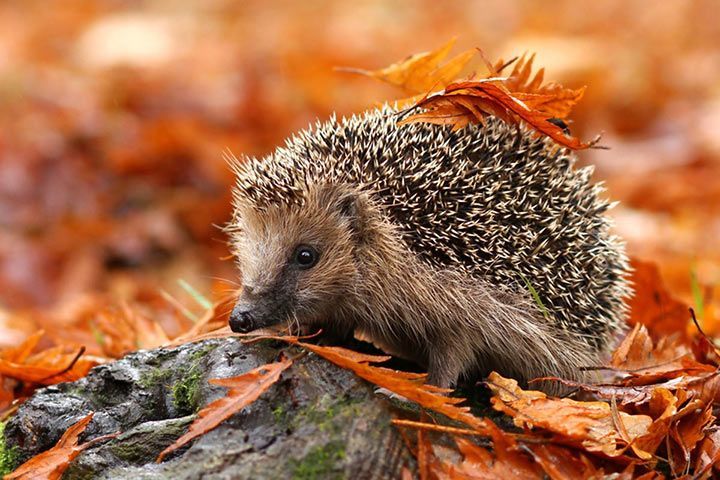
If you want to sweep up leaves in your garden or clean up piles of leaves in autumn, you should be extra careful, because hedgehogs could be hiding underneath!
May I Touch a Hedgehog?
Hedgehogs should not be touched. They can survive very well without our help. If a hedgehog runs - apparently sick and skinny - over frozen ground in winter or if it is visibly injured, it may be necessary to touch a hedgehog in order to bring it to the vet.
Then you should always wear gloves. First of all this prevents you from being hurt by his spines. Hedgehogs sometimes have fungal diseases that are infectious, too. For humans and for pets.
Reproduction
Hedgehog Carousel
The so-called "hedgehog carousel" can be watched during the mating season. The male hedgehog keeps running in circles around the female of its choice. If this does not convince the lady, she also starts to run in circles, raises her spines and hisses. This can go on for hours.
How Do Females Give Birth to Their Offspring?
After a gestation period of 30-48 days, hedgehogs give birth to four to five blind and deaf babies. At this time they already have about 100 spines. You might ask yourself: How does the mum manage to bear her babies without getting hurt? The spines of the babies are still very soft and take some time to harden after the little hedgehogs have come into the world.
Fun Facts
Hedgehogs Like Beer
When the evening comes, hedgehogs strike out to drink some beer. This is really true! They don’t have to visit a pub for this, because neighbors often place little bowls with beer (so-called beer traps) in their gardens to keep away the slugs. Hedgehogs love to take a sip from the bowls, get drunk and totter about.
Yet, this is not really funny: In this condition the hedgehogs do not roll into a ball to protect themselves and are an easy prey for eagle owls, foxes, and martens. Some of them get so drunk that they lay their heads into the bowls and drown.
Do Hedgehogs Transport Food on their Backs?
Um. No. Sounds practical, but they do not. If there are mushrooms or pieces of apple on their spines, it is because they accidentally gathered them. Looks funny though!
The Hedgehog Is Related To:
Animals in the Same Biome:
- Badger
- Bumblebee
- Eagle Owl
- Eurasian Jay
- Firefly
- Honey Bee
- Great-Spotted Woodpecker
- Ladybug
- Microbat
- Mouse
- Rabbit
- Red Fox
- Red Squirrel
- Wasp
Video: 15 Facts About Hedgehogs

(Video opens on YouTube)
- Watch Now on animalfunfacts.net:
 All About Hibernation